Tired, Wired, and Overstimulated: The Truth About Brain Fog, 3:00 AM Wake-Ups, and Sensory Overload
 Liz Kaisinger

Struggling with brain fog, 3 AM wake-ups, and sensory overload? The real cause of the "tired-but-wired" loop and how to reset your nervous system.
When Your Body Whispers (and Then Shouts):
The Truth About Brain Fog, 3:00 AM Wake-Ups, and Sensory Overload
You know the feeling, even if you’ve never had the words to explain it to your doctor.
It’s waking up at 3:14 AM with your heart beating just a little too fast, staring at the ceiling while your mind replays a completely inconsequential email from three days ago.
It’s standing in the kitchen pantry at 11:00 AM, staring blankly at a box of crackers, with zero memory of what you walked in there to grab.
It’s buttoning your favorite pants comfortably at 7:30 AM, only to feel tight, distended, and uncomfortably bloated by 3:00 PM—even though all you had for lunch was soup or a light salad.
And by 6:00 PM? The kitchen lights feel too harsh. The TV is too loud. The dog is barking, someone is asking you what’s for dinner, and if one more person touches your arm or asks you a question, you feel like you might shatter into a thousand pieces.
So you retreat. You sit on the closed lid of the bathroom toilet for four minutes just to exist in total silence.
Then the internal critic kicks in:
- “What is wrong with me?”
- “Why am I snapping at the people I love?”
- “Am I just getting old?”
- “I just need to try harder on Monday. More water. Better sleep. Less sugar.”
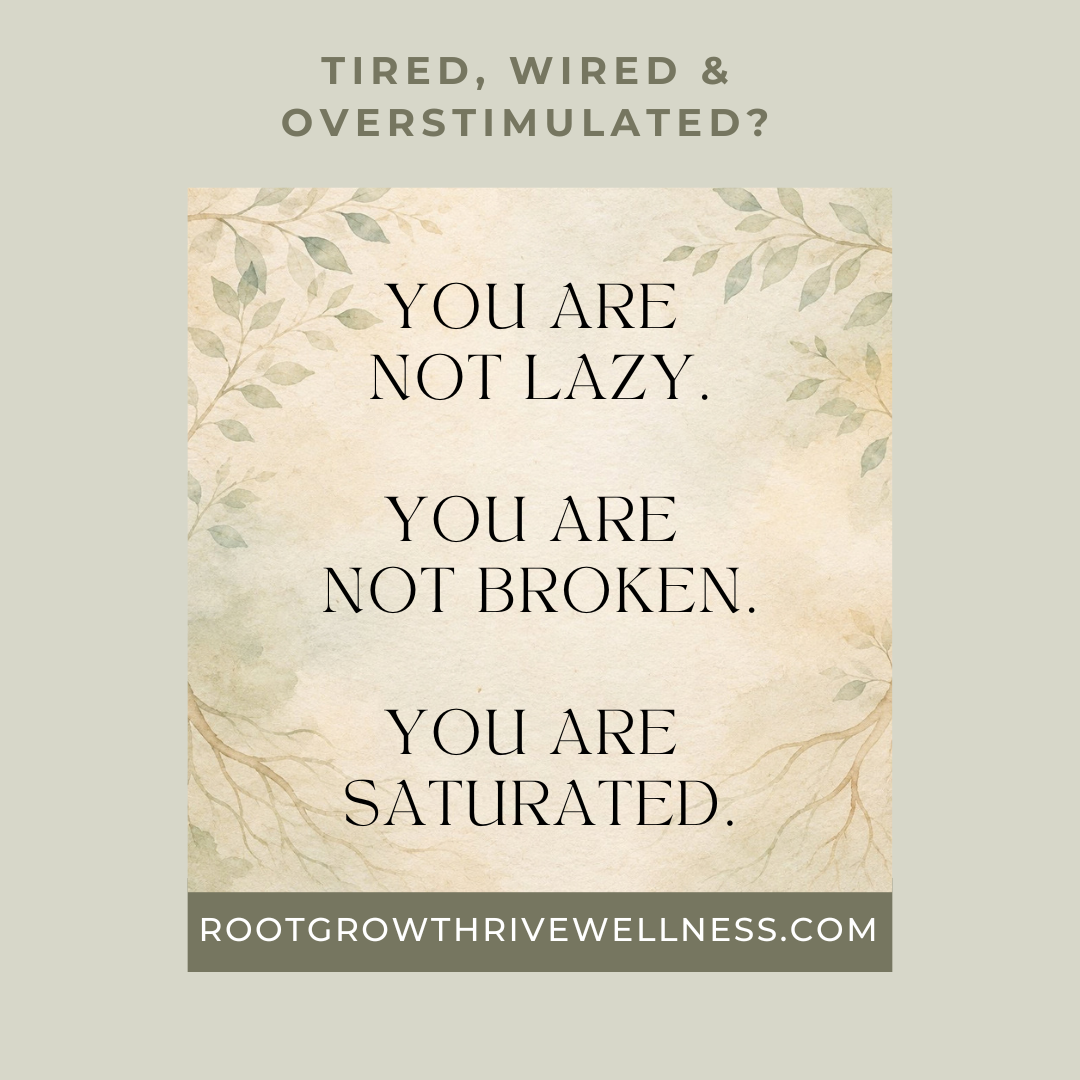
Here is what I want you to hear before you read another word: You are not broken, you are not lazy, and you are not losing your mind.
What you are experiencing are invisible symptoms—the physical and cognitive distress signals of a nervous system that has been running on high alert for far too long.
Why These Symptoms Feel So Frustrating (and Lonely)
The hardest part about these symptoms is that they are entirely invisible to the outside world.
To your colleagues, your partner, and your friends, you look like you’re holding it all together. You show up, you deliver, you pack the lunches, you meet the deadlines. You might have even gone to your primary care doctor, had a full panel of blood work run, and waited with bated breath for answers—only for them to glance at the results and say:
“Everything looks completely normal. Your thyroid is fine, your iron is fine. You’re probably just stressed. Try to get more sleep.”
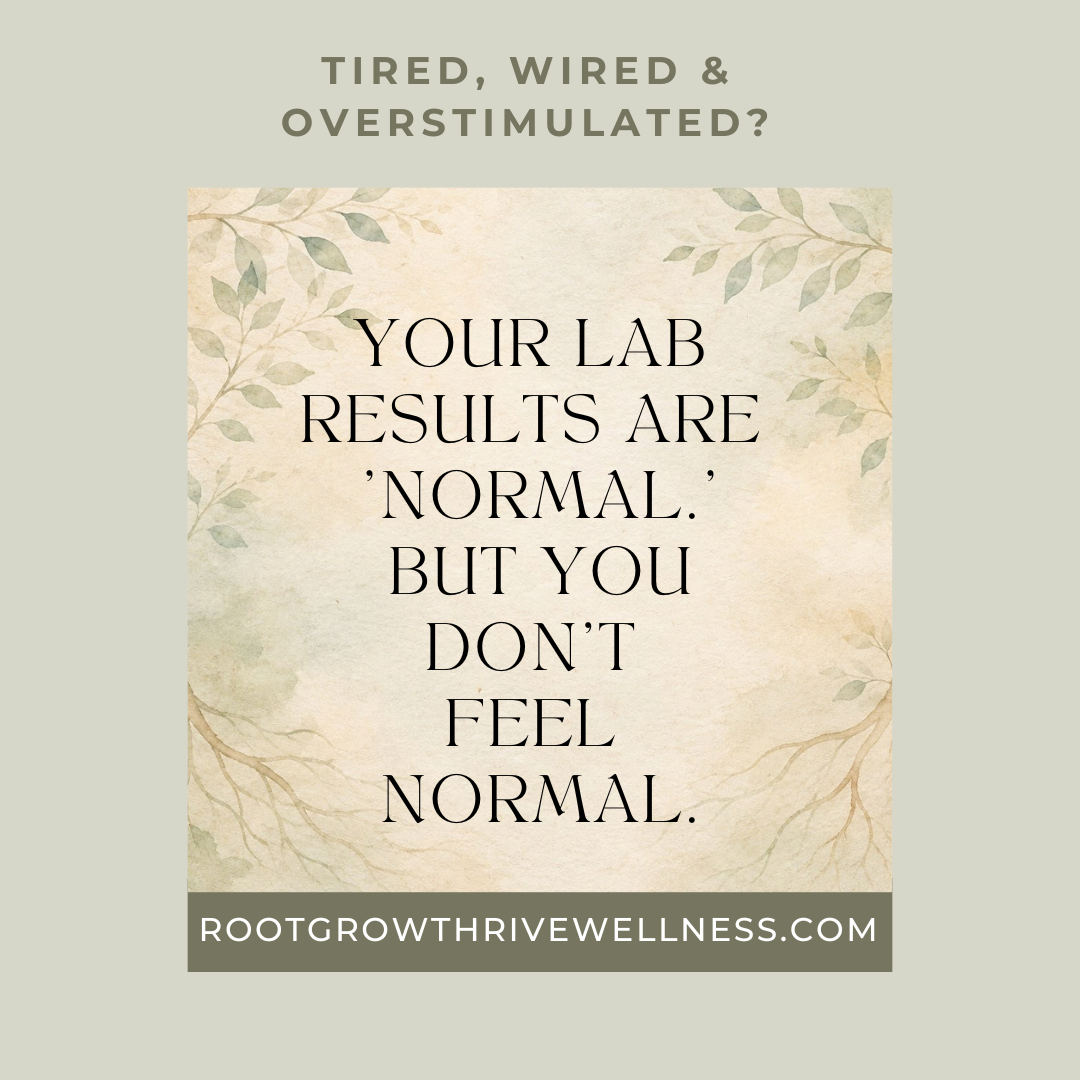
It feels like the ultimate gaslight. You leave the clinic holding normal lab results, feeling deeply abnormal inside your own skin.
Why does this happen? Because conventional wellness treats the human body like a simple machine: fuel in, energy out; sleep 8 hours, feel rested.
When that doesn't work, we fall into the "When… then…" trap:
- "When work slows down next month, then I’ll start feeling better."
- "When the kids are older, then my brain will come back."
- "When I finally find the discipline to do a 60-minute morning workout, then I’ll fix this."
Waiting for life to slow down is an illusion. And trying to fix these symptoms with a massive 90-minute routine only adds another heavy obligation to a plate that is already overflowing.
The Multidimensional Reality of Your Symptoms
Human energy isn't a single battery that simply needs an extra cup of coffee or an early bedtime. It is multidimensional. When you experience invisible cognitive and physical crashes, the root cause is rarely just physical. It is an unseen leak across four essential tanks:
The 4 Energy Tanks
- BODY (Physical) → Somatic tension, breath, sleep
- FOCUS (Mental) → Decision fatigue, open tabs
- HEART (Emotional) → Boundaries, absorbing stress
- SOUL (Spiritual) → Joy, play, presence, meaning
Look at how these invisible symptoms actually cross over all four dimensions:
1. The 3:00 AM Cortisol Alarm & "Tired but Wired"
- The Body: Your adrenal glands are pumping cortisol at night because your body never received the physiological signal that it was safe to drop into rest-and-repair mode.
- The Focus: Your brain has learned that 3:00 AM is the only time the world stops demanding answers, so it uses that silence to process your backlog of mental tabs.
- The Heart: You spent the day accommodating everyone else’s emotional temperature. Bedtime is your only sliver of autonomy.
2. Brain Fog & Losing Words
- The Body: Shallow "chest-breathing" under stress keeps your brain slightly deprived of optimal oxygenation, pulling blood flow away from the prefrontal cortex (responsible for executive function) toward survival centers.
- The Focus: Cognitive saturation. You aren't losing your memory; your working memory is simply holding too much data at once.
- The Soul: When life becomes an endless mechanical checklist, the mind disconnects (a subtle micro-dissociation) as a self-protective measure against emotional burnout.
3. Sensory Overload & "Touch-Out"
- The Body: Your sympathetic nervous system is stuck in a low-grade fight-or-flight loop, turning the "volume" knob of your sensory receptors all the way up.
- The Heart: Weakened emotional boundaries. When you spend all day absorbing the anxieties, moods, and demands of others, everyday stimuli feel like an invasive attack.
4. The 3:00 PM "Stress Bloat"
- The Body: When adrenaline is elevated, blood flow is diverted away from the gut to large muscles. Digestion literally stalls, stomach acid drops, and food sits fermenting.
- The Focus: Eating lunch while scanning emails, reading news, or driving. The brain never registers the safety required to digest food properly.
The Cure Isn't an Overhaul—It’s "Micro-Moments"
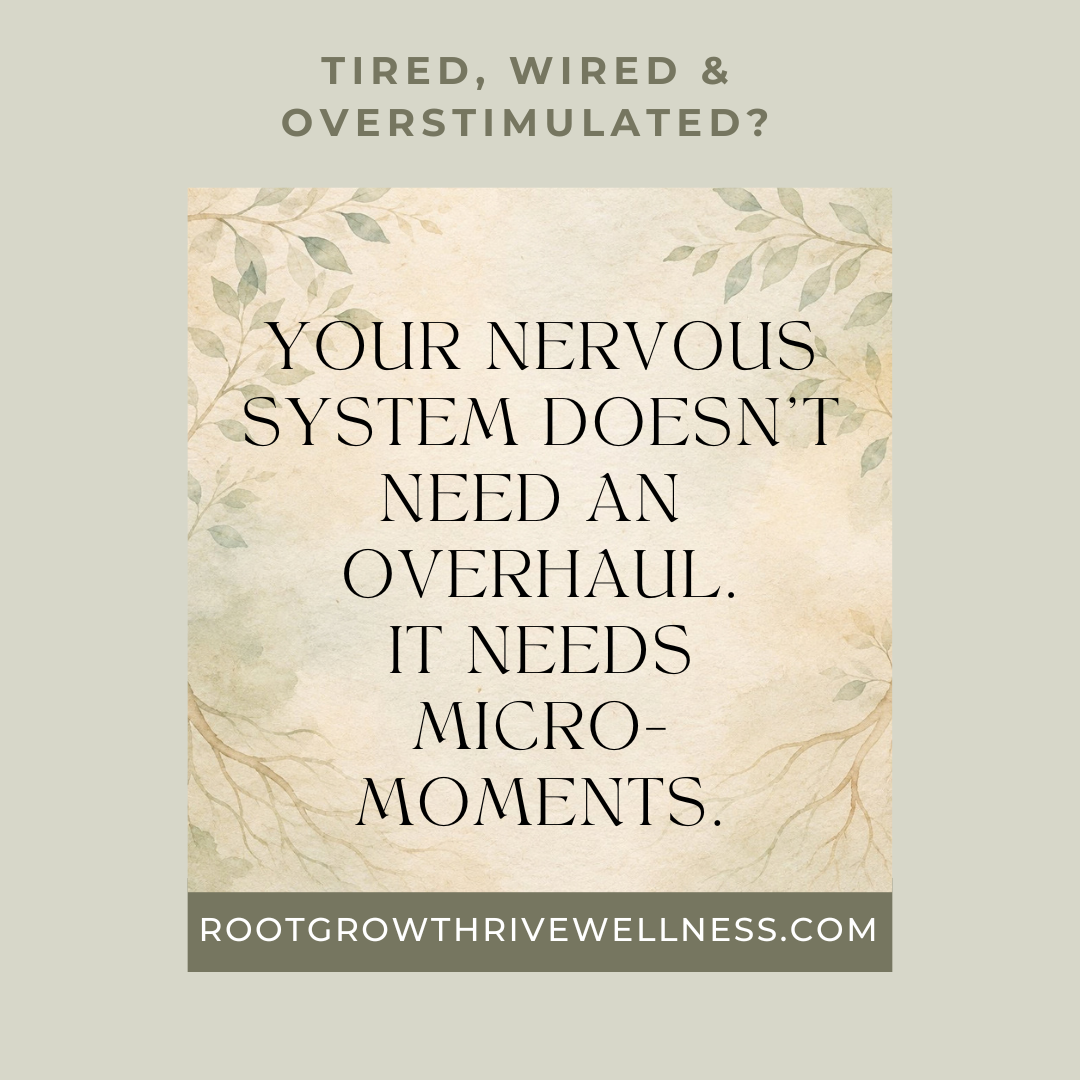
If you try to resolve these symptoms by adding a strict 6-step morning routine, an extreme dietary overhaul, or an aggressive workout schedule, you will likely abandon it by Thursday.
Your nervous system cannot heal from burnout while being forced into another high-pressure performance.
The real antidote is learning to weave Micro-Moments into your day—intentional 30- to 120-second pauses that send an unmistakable message of safety to your central nervous system right in the middle of your busy life.
Try these three starting today:
1. The 60-Second "Physiological Sigh" (For the Tired-Wired Loop)
- How to do it: Take two quick sniffs in through your nose (one deep breath, topped off with a short sharp inhale to fully inflate the lung sacs), then release a slow, audible sigh out through your mouth.
- Why it works: Two or three rounds immediately slows your heart rate, shifts you out of fight-or-flight, and resets autonomic tone before bed or between meetings.
2. The Horizon Soften (For Brain Fog & Screen Overload)
- How to do it: Stop staring at your screen or phone. Look out a window or down a long hallway. Without moving your head, allow your peripheral vision to expand, noticing what is in the corners of your visual field for 60 seconds.
- Why it works: Focal tunnel vision triggers alertness and vigilance. Panoramic vision automatically down-regulates the nervous system, clearing mental fatigue.
3. The 3-Breath Pre-Meal Anchor (For 3:00 PM Bloat)
- How to do it: Before taking your first bite of food, put your fork down. Place one hand on your belly. Take three slow breaths, feeling your belly expand outward against your hand, and exhale fully.
- Why it works: This simple 30-second anchor signals your vagus nerve to divert blood back to the digestive organs, turning on digestive enzymes before you swallow.
Stop Guessing Where Your Energy Is Leaking
These invisible symptoms are not signs that you are broken. They are simply your body’s dashboard warning lights, telling you that one (or more) of your internal tanks is running on empty.
You do not need to wait until life magically slows down to get your brain, your stomach, and your calm back. You just need to know which tank is leaking so you can apply the right micro-restoration.
To help you get clarity without adding another project to your plate, I put together the Multidimensional Energy Audit (MDEA) Package—and it’s completely free.
Here is what is waiting inside for you:
- The 5-Minute Energy Quiz: Pinpoint exactly which of the 4 tanks (Body, Focus, Heart, or Soul) is causing your brain fog, sleep struggles, or physical fatigue.
- The Micro-Moment Restoration Cheat Sheet: A handy guide of fast, 2 to 10-minute nervous system resets you can do at your desk, in your car, or before bed.
- Guided Audio Resets: A 10-Minute Grounding Body Scan and a 5-Minute Morning Positivity & Joy Meditation to gently regulate your nervous system on days when your mind won't stop racing.
- The 30-Day Micro-Shift Challenge: A low-pressure, gentle tracker designed to build long-term balance without overwhelm.
You don’t need an exhausting 90-minute routine to feel like yourself again. You just need tiny, intentional micro-moments.
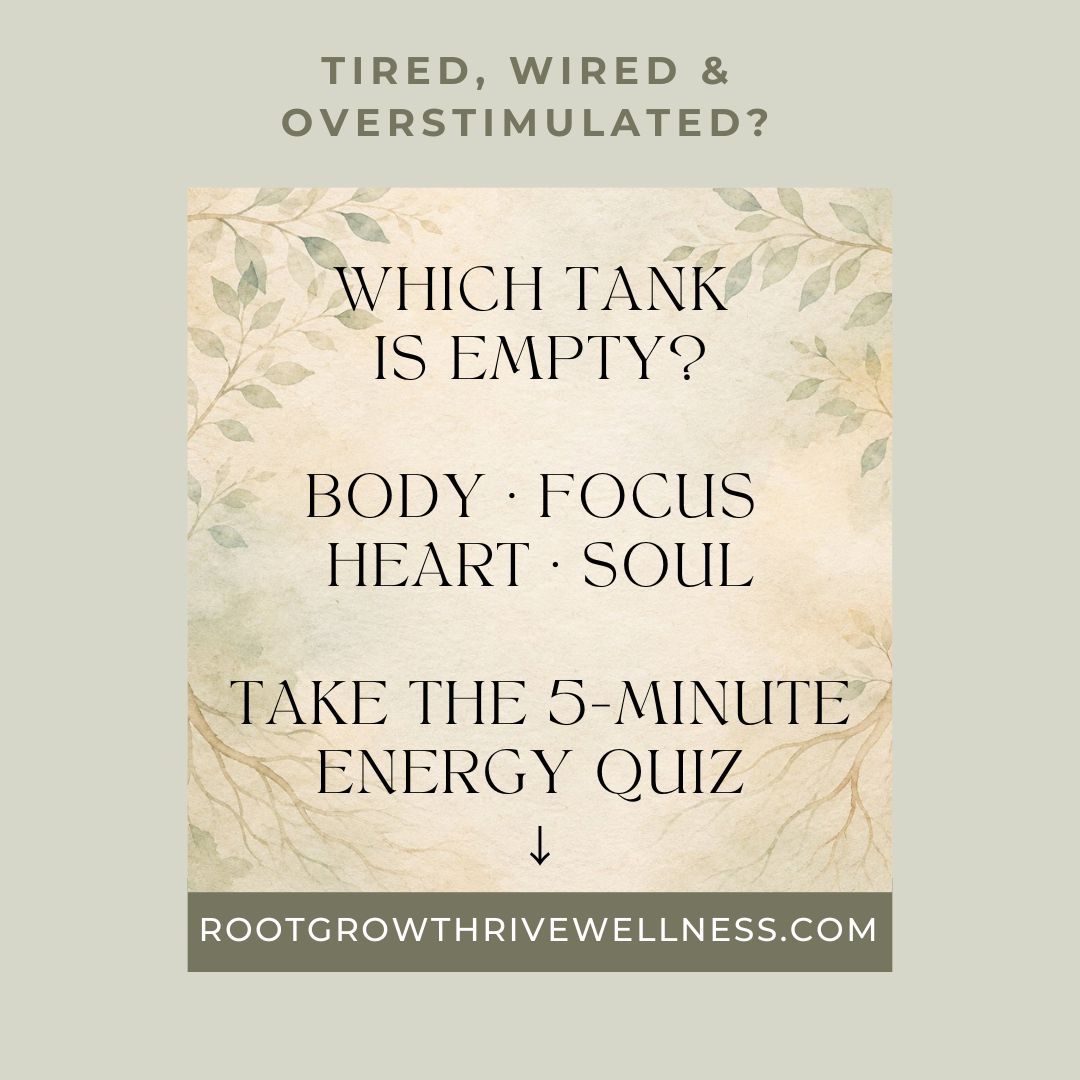
👉 Download Your Free Multidimensional Energy Audit Package Here